
There is no exact word for ‘hello’ in Siksikáí'powahsin, the Blackfoot language. Only ‘Oki,’ which translates more precisely to “wishing you a good life.” Their greeting holds more investment. The Blackfoot Nation encompasses land in the plains of Montana, Alberta, Canada, and beyond.
Before European colonization, over 500 indigenous languages were spoken in North America. Today, more than 150 of those languages remain, but they’re endangered.
Eugene Brave Rock is a Hollywood actor and stuntman. He's best known for his role as “Chief”– one of the titular heroine's allies in 2017’s Wonder Woman. In the film, the First Nations actor speaks in traditional Blackfoot. That moment in the film was something he knew would be significant, but Brave Rock couldn’t have predicted just how impactful. The reaction from fans—especially indigenous fans—hearing their language, got Brave Rock thinking. He knew that there needed to be more of this. More speaking and hearing the languages of indigenous people.
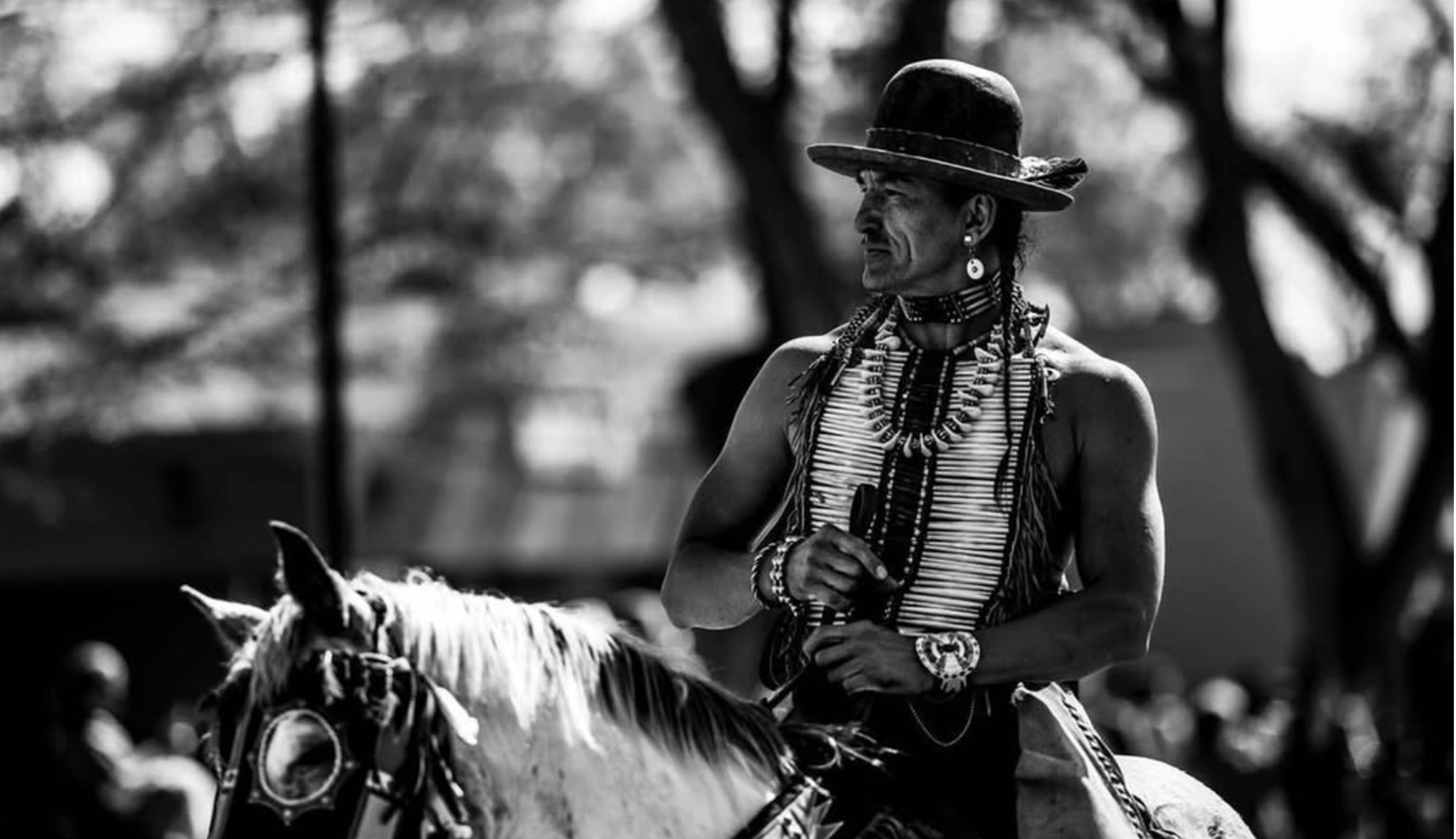 Brave Rock grew up on the Kainai Nation reserve in Alberta, Canada. He was raised by his grandmother, and grew accustomed to hearing her stories and learning about his ancestors through oral tradition.
“My grandmother, Florence Brave Rock, instilled in me the belief that the sky is the limit,” Eugene said. “She grounded me in strength, culture, and language. And that's the foundation that's carried me to a place where, many years later, I was able to speak my language on the set of Wonder Woman.”
And so, Brave Rock has been thinking about a language project for his entire life, and in many ways, has always been working on it. But in 2020 he officially launched the Oki Language Project. An effort to preserve indigenous languages. He’s made it a point to drive to as many tribal nations as possible, and talk with elders. He had no real plan, no itinerary, no agenda. Just talk and listen to indigenous people. If he had an acting job that he could drive to, whether it was in Florida or Canada, he’d stop along the way, and learn.
One thing that has made the project truly come to life for Brave Rock is his Airstream Basecamp. The ability to have people come into his space, where he brews them coffee and gives them quiet attention, has made the process even better. Even though the space is intimate, Brave Rock finds that it invites conversation.
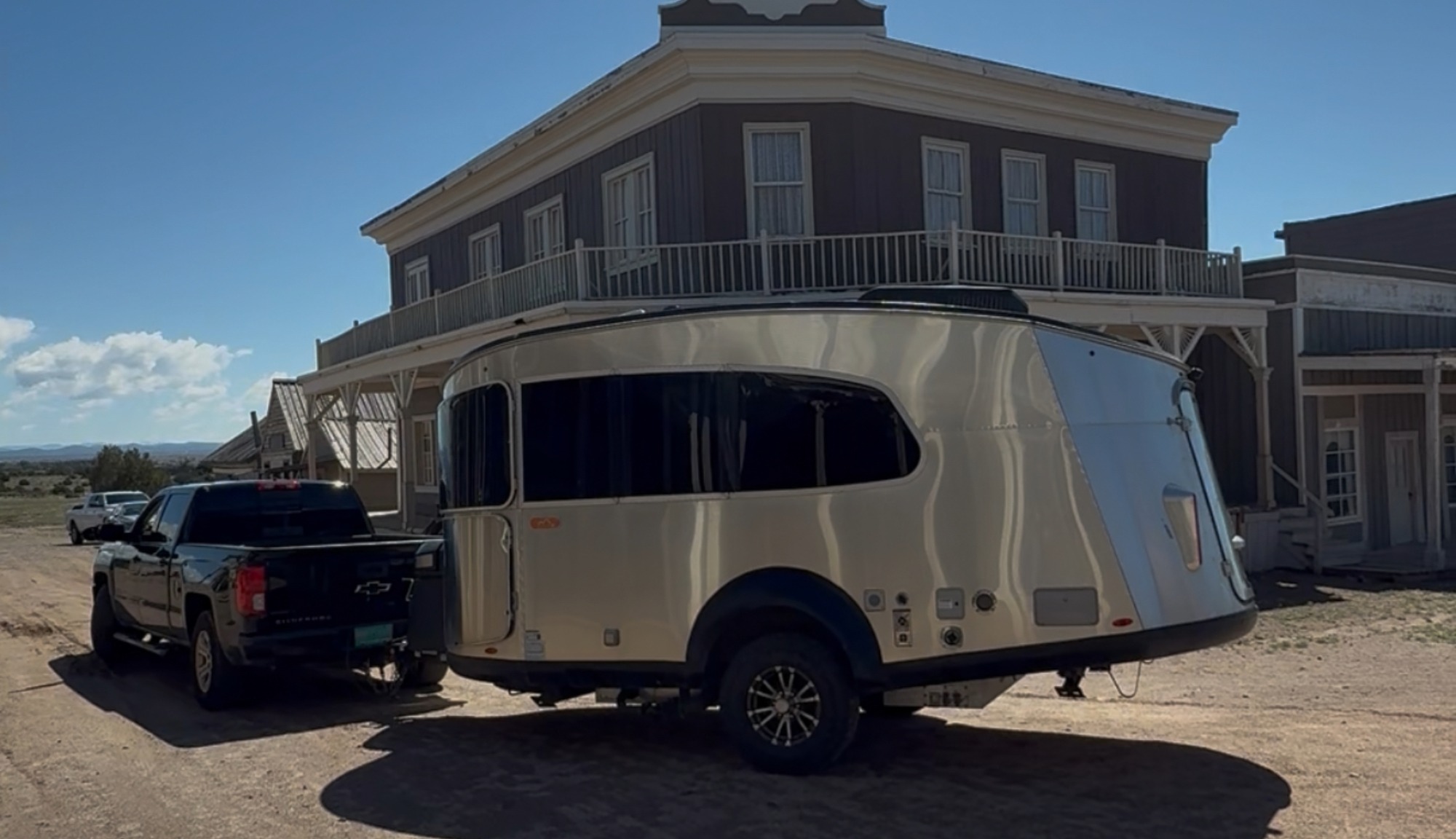 “I used to visit elders in their homes,” Brave Rock said. “I'd set up a camera with microphones, and I realized I placed a burden on them, because they would accommodate me. They’d clean up and cook, and it was a lot. But with the Airstream, I’m able to bring them into my own space that I've created. I make my own jerky, and give that to them, and I cook and sit down with them, to share the comfort of the space.”
It’s important to Brave Rock to honor traditional protocol. “I always come [to the elders] with tobacco, sage, sweet grass, with gifts like pottery, blankets and other items that I've acquired through other indigenous artists or supporters across North America,” he says. “I like to bring special gifts. Sometimes I bring ammolite, the rare Blackfoot gem. There's a legend behind this gem and the significance that it holds—known to bring good luck and healing. We were once given this stone when we were going on a hunting party, or if someone was sick.”
Bringing gifts, having prayers, going through the steps of the ancestors, are signs of honor and respect. “That's the protocol. I can't just go to an elder and be like, ‘Hey, can you tell me this story?’ There is a set way of doing things, and I feel like we're losing that tradition of protocol, just like we're losing our languages.”
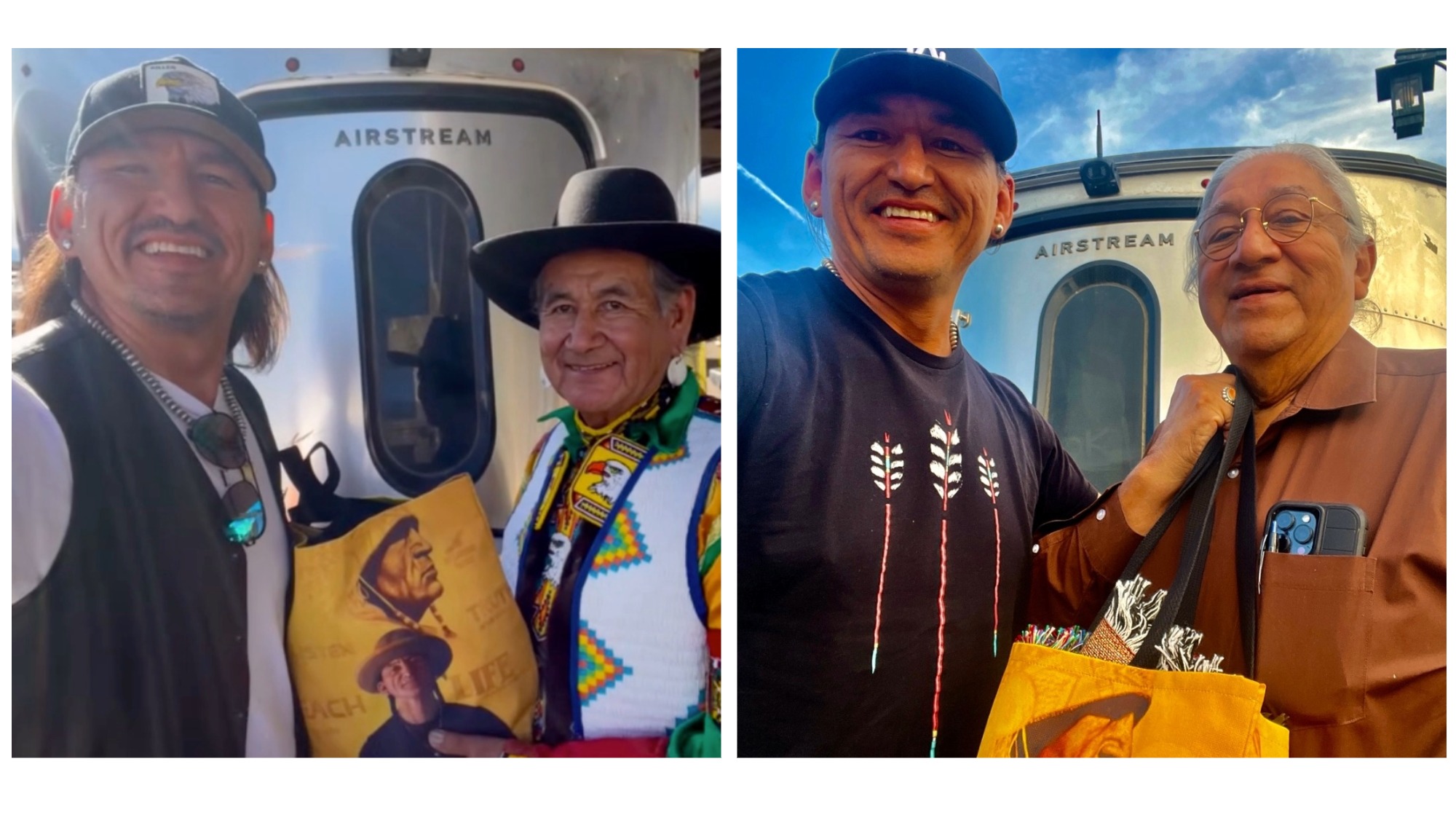 One thing that has stuck out to Brave Rock, in all of his conversations and visitation, is how often there are similarities in stories from people with vast amounts of land between them. “Every mile on the road has led me deeper into the period of who we are as indigenous people. Each visit, each conversation, has been a doorway into a time before borders, where language, land, and story were one. I’ve crossed thousands of miles on the map, but the real distance I've traveled is into the heart of memory and culture. Like a time machine.”
On one trip with his Basecamp, Brave Rock made his way to the Seminole Nation’s Big Cypress Reservation. “This is deep in the Everglades, and I met Billy Walker, a renowned alligator wrestler. When we were there talking, surrounded by water, it made me realize that language is about survival, remembrance, and relationships. Retaining is healing.”
Brave Rock has gained support from other First Nations actors and artists, including Cherokee actor Wes Studi, Hunkpapa Lakota actor Zahn McClarnon, and Shoshone Mexican rapper Taboo Nawasha, of the Black Eyed Peas. He hopes to gain even more support from others, so that he can continue to expand what’s possible.
Brave Rock’s ancestors, and the ancestors of so many others, have endured. They’ve told stories, and kept their history alive. As he says, this is a present-tense narrative of survival. Perhaps the ultimate superhero is the one who is simply listening.
Looking for adventure with purpose? Download the Basecamp brochure to discover what's possible.


