
For 95 years, Airstream has embodied the spirit of possibility. The brand’s evolution mirrors nearly a century of cultural, design, and technological change, all while staying true to a singular philosophy: build something better and put travel adventure at your doorstep. Across the decades, that philosophy transformed a backyard project into an American icon.
From a Problem-Solver’s Workshop to an American Classic (1920s–1950s)
Airstream’s story begins with Wally Byam, a true Renaissance Man—publisher, writer, advertiser, engineer, and tinkerer—who’s first foray into RV design was drive by the simple fact that his wife didn't want to sleep on the ground. That practical instinct led him to build his first trailer in the late 1920s, and to officially establish Airstream in Los Angeles in 1931. The 1936 Clipper model, currently on display in the Airstream Heritage Center in Jackson Center, Ohio, signaled the arrival of a new standard in design: aerodynamic, lightweight, and unmistakably modern.
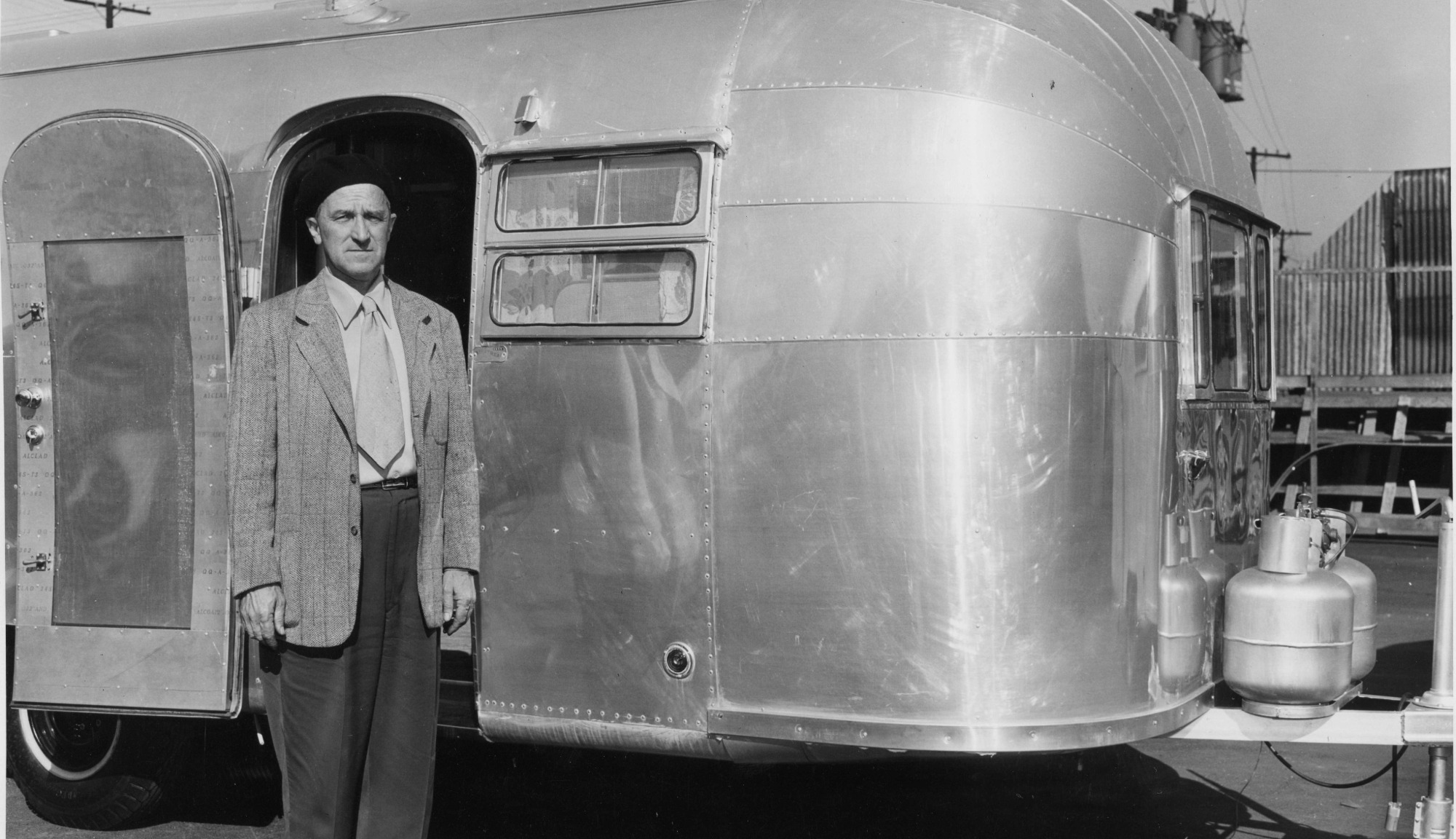 The onset of World War II paused everything. With aluminum diverted for wartime production, Airstream closed its doors, and Wally went to work in the aircraft industry. There, he sharpened his understanding of lightweight construction and the art of riveting. Those skills would redefine Airstream trailers in the postwar era. When the business reopened in 1946, demand surged, and Wally’s attention turned toward marketing through experience.
The 1950s were a decade of bold experiments and bigger horizons. The first international Caravan to Mexico departed in 1951, capturing imaginations and demonstrating Airstream durability under real-world conditions. In 1952, Wally established an eastern distribution point in Jackson Center, Ohio—now the heart and home of Airstream production—and soon after asked his cousin, Helen Byam Schwamborn, to help build a community around the lifestyle. In 1955, the Wally Byam Caravan Club International (now Airstream Club International) was born during a Caravan to Nova Scotia.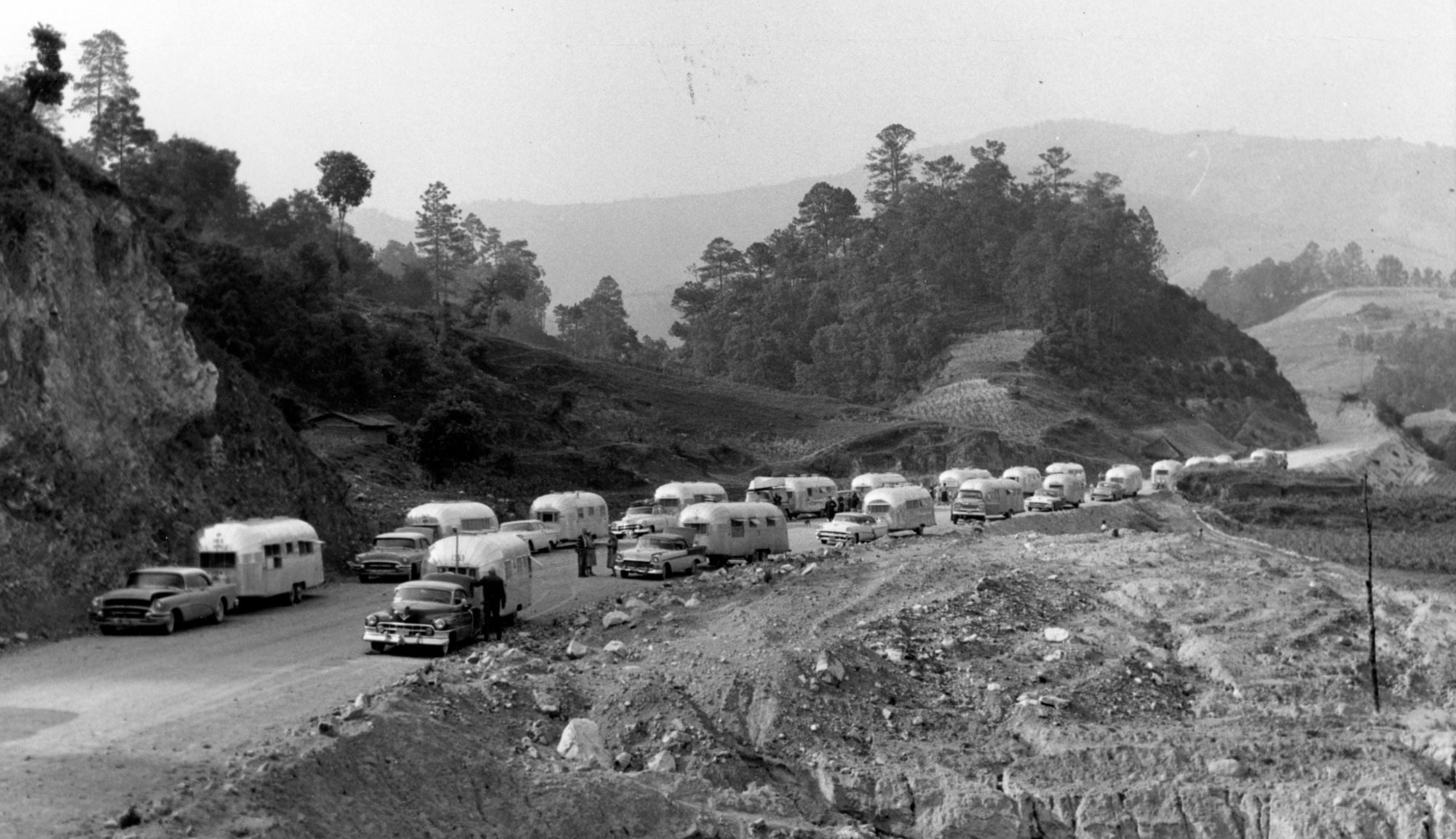 Innovation expanded inside the trailers, too. New developments in water heaters, refrigeration, and air conditioning culminated in the 1958 Airstream International, recognized as the first fully “self-contained” travel trailer that didn’t require traditional campground hookups. Yet the decade’s ultimate expression of ambition came with the legendary 1959–1960 Cape Town to Cairo Caravan, a journey across Africa that showcased the durability and adventurous spirit of both Airstreamers and their trailers.
Airstream Goes Global—and Even Lunar (1960s–1970s)
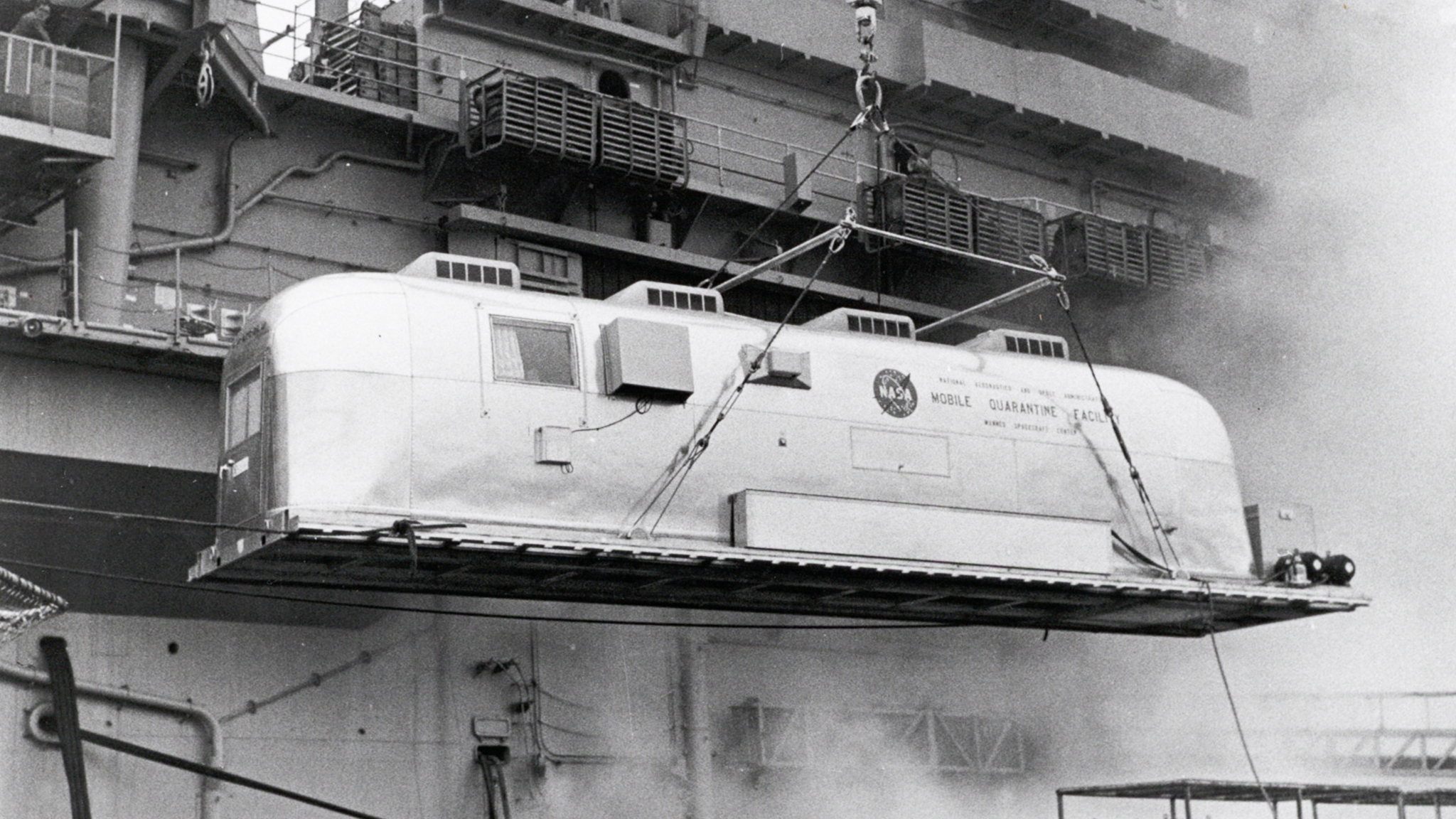
The 1960s began with heartbreak. Wally Byam passed away in 1962 after a battle with brain cancer, leaving a legacy carried forward by his right-hand men, Art Costello and Andy Charles. Through Art and Andy, Wally Byam's dream lived on. The 1963–1964 Around the World Caravan turned Wally’s lifelong vision into reality, proving that Airstream travel could encircle the globe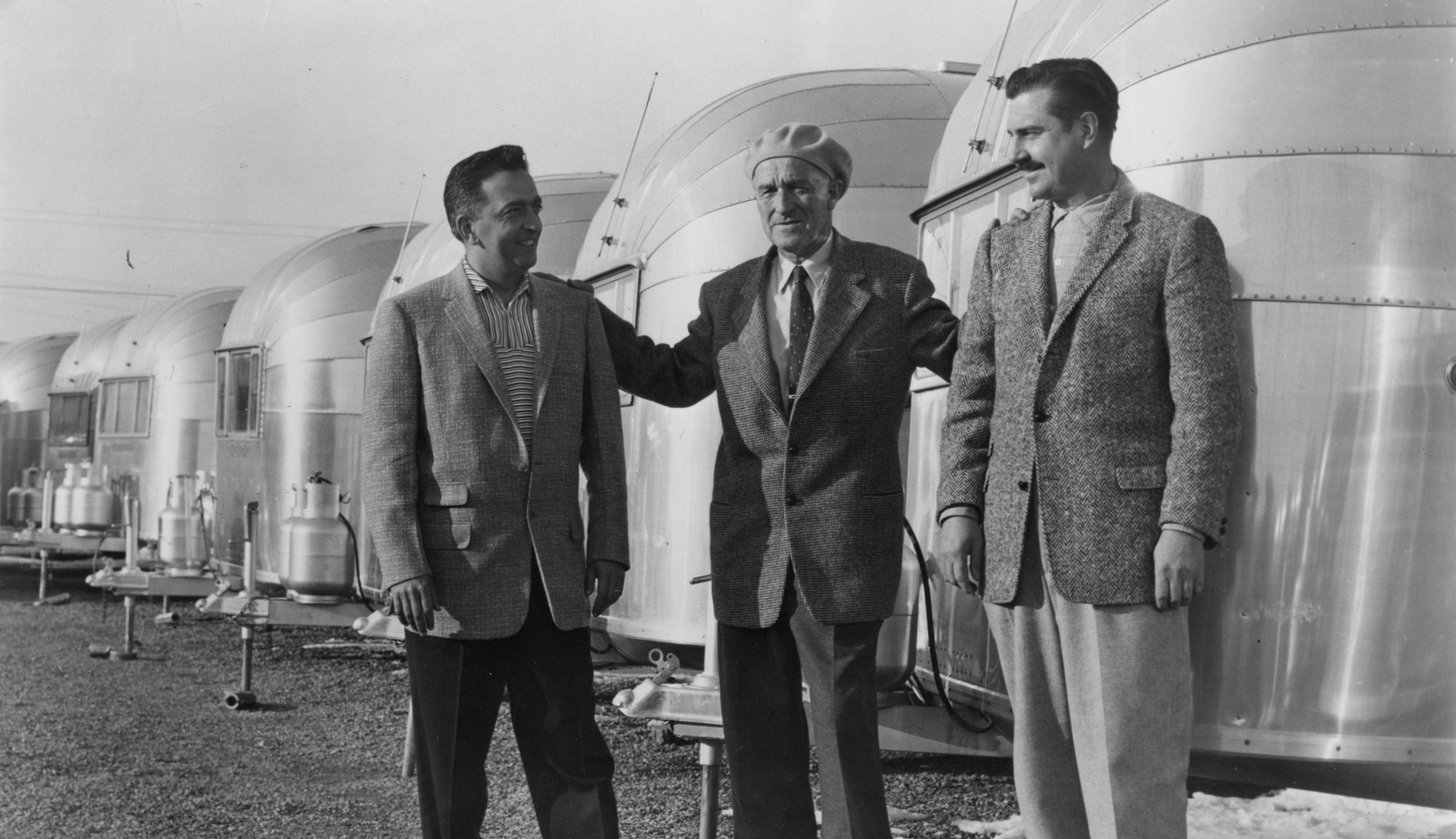 Innovation continued at home. In 1969, Airstream introduced the first major redesign of the trailer shell in more than 30 years, refreshing both interior layouts and exterior structure. That same year, Airstream entered the space age when NASA used a Mobile Quarantine Unit to house the Apollo 11 astronauts after their return from the moon. It was a cultural moment that permanently linked Airstream to exploration around the world and beyond Earth.
The 1970s brought expansion and turbulence. A new travel trailer production facility opened in 1971. The decade also saw the introduction of the Argosy line in 1972 and the Argosy Motorhome (Airstream’s first motorized RV) in 1974. But the gas crisis of the 1970s hit hard. High fuel prices stifled travel demand, and by the late ’70s, corporate owner Beatrice Foods decided to sell the company.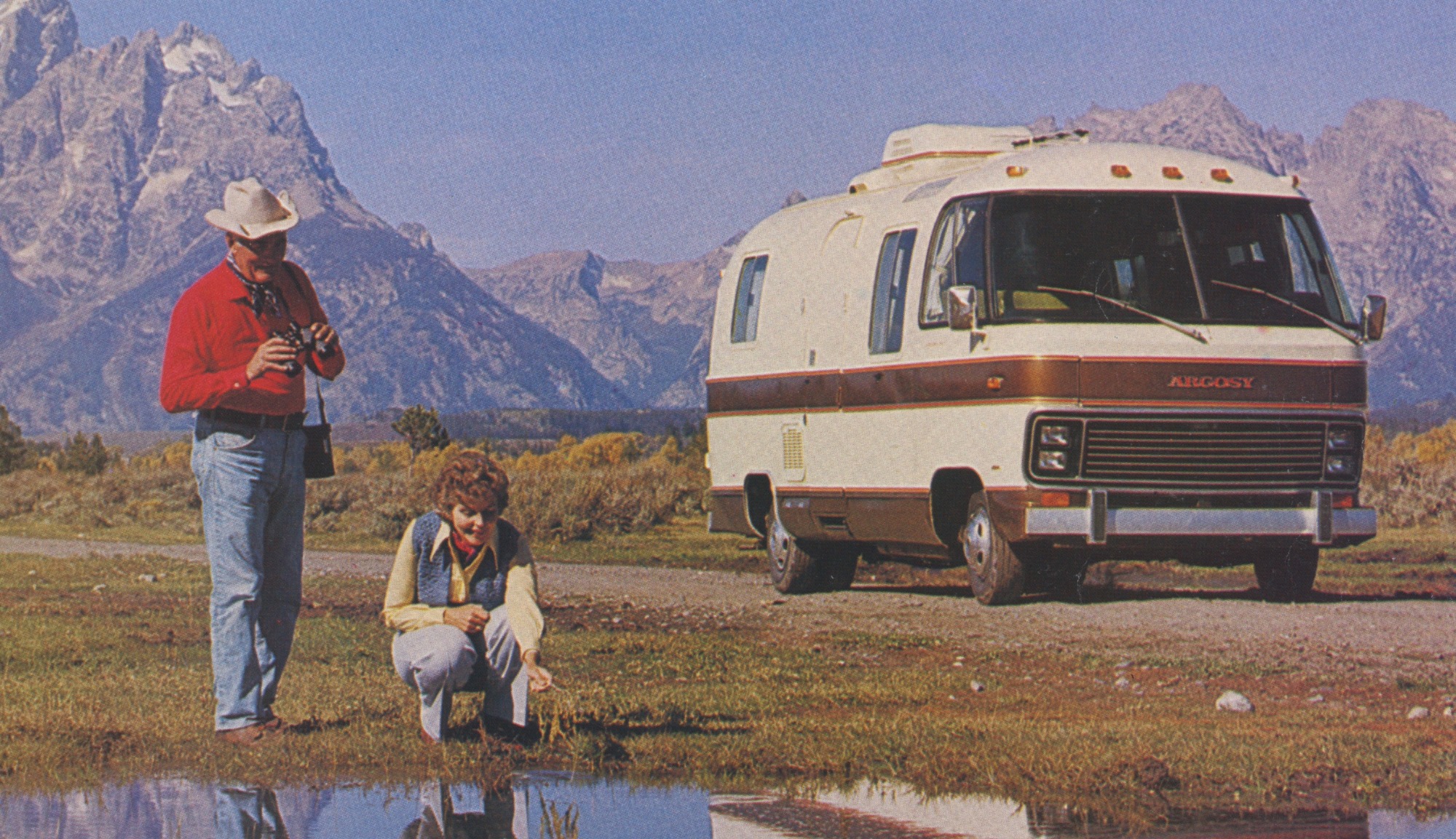 In a defining moment for Airstream’s future, investors Wade Thompson and Peter Orthwein acquired the company in 1979. Within a year, they erased $13 million in debt and produced a $1 million profit, forming Thor Industries in the process. They consolidated production in Jackson Center, and since 1980, every Airstream has been built there—a tradition that continues today.
Reinvention, Innovation, and New Frontiers (1980s)
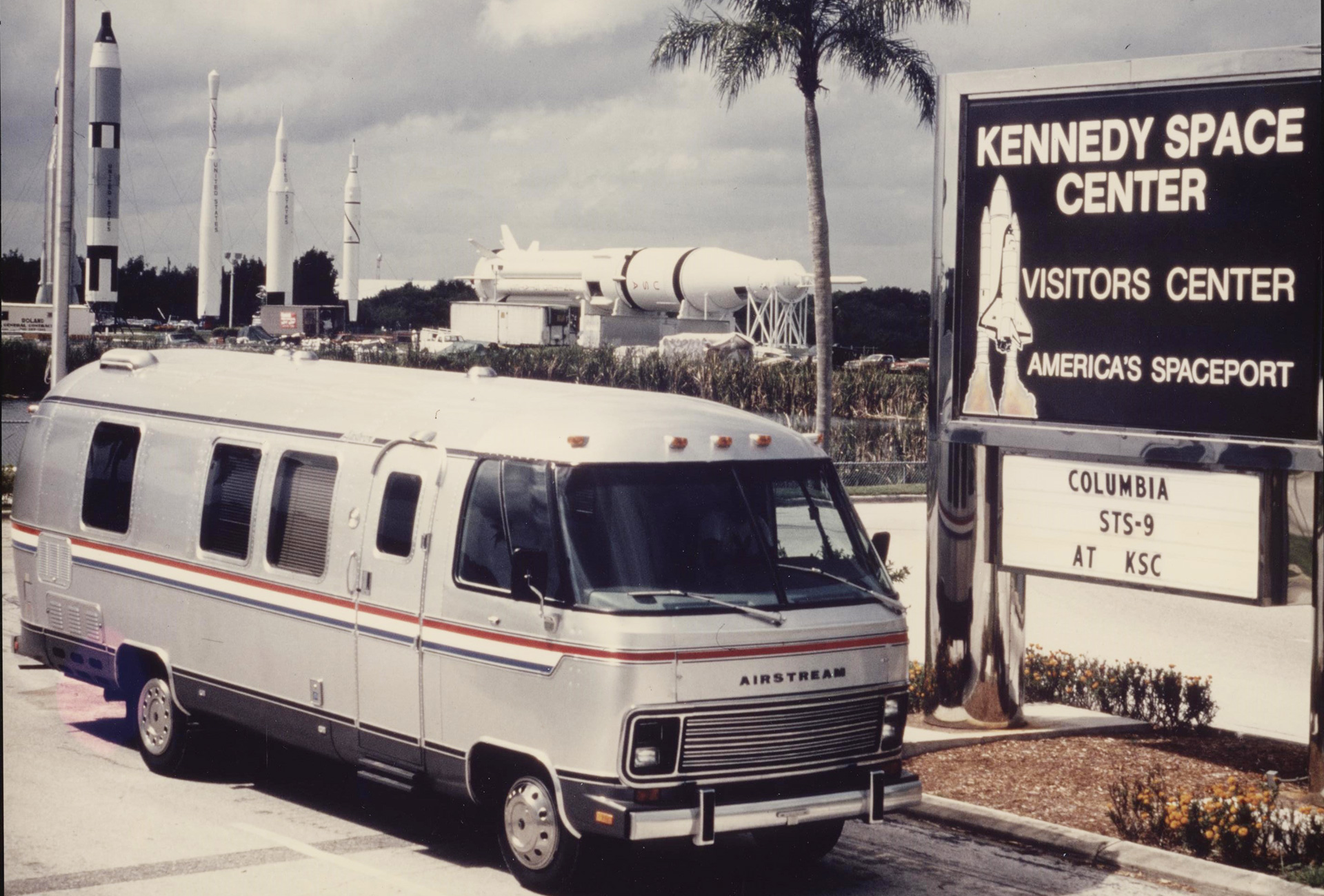
The 1980s opened with a renewed sense of possibility. NASA, satisfied with its earlier collaboration, returned to Airstream in 1983, commissioning a new crew transport vehicle for Space Shuttle astronauts. The resulting modified Excella Motorhome became known as the “Astrovan,” carrying every Shuttle crew from 1983 through the final mission in 2011. It remains one of the most famous motorhomes ever built, and today is on display in the Kennedy Space Center museum at Cape Canaveral.
Meanwhile, Airstream’s sense of global curiosity continued. Between 1985 and 1988, nine WBCCI Caravans traveled through China in custom-built 21‑foot trailers—an unprecedented cross-cultural exploration that reflected Airstream’s increasingly international reach.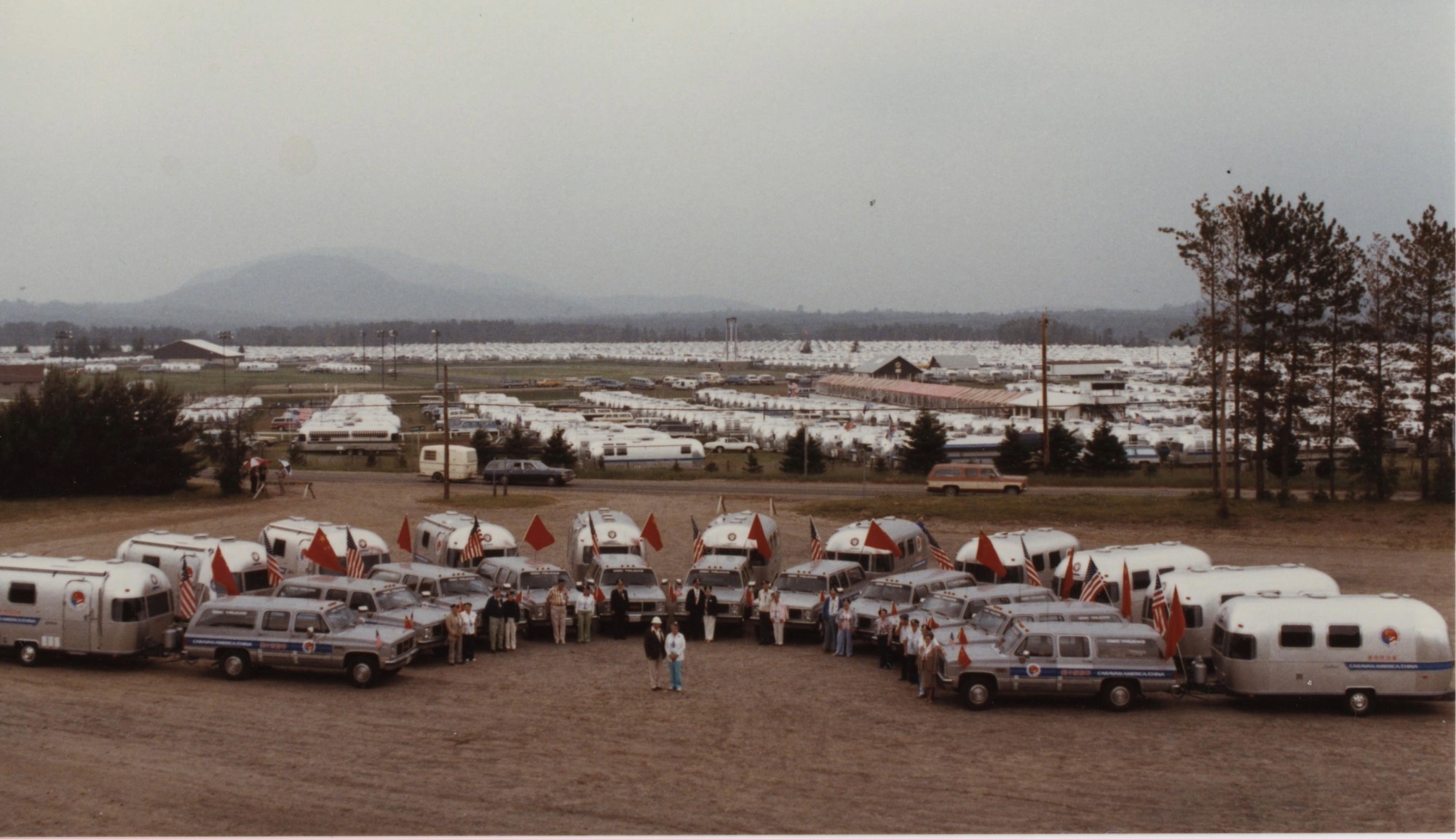 Airstream's Commercial Department also expanded rapidly, producing mobile medical units, computer labs, audio labs, and other custom solutions. Even as the company diversified to respond to lingering economic challenges, it remained committed to innovation in RV design—from the unusual but compelling Funeral Coach to the 1989 Land Yacht Travel Trailer and Motorhome, both of which introduced new structural concepts and materials. And in 1987, Airstream laid the groundwork for its modern touring coach lineup with the B‑190 Class B RV, offering full motorhome functionality on a nimble Ford chassis.
Subtle Redesigns, More Comfort, and a Bold Slide-Out (The 1990s)
After nearly three decades without a major overhaul, 1994 marked a quiet revolution for Airstream. Engineers refined the profile and structure to unlock more space and comfort without sacrificing performance or that unmistakable, riveted silhouette. By 1996, Airstream widened the entire travel trailer line by about five-and-a-half inches and gave interiors a comprehensive refresh, aligning modern ergonomics with classic craft.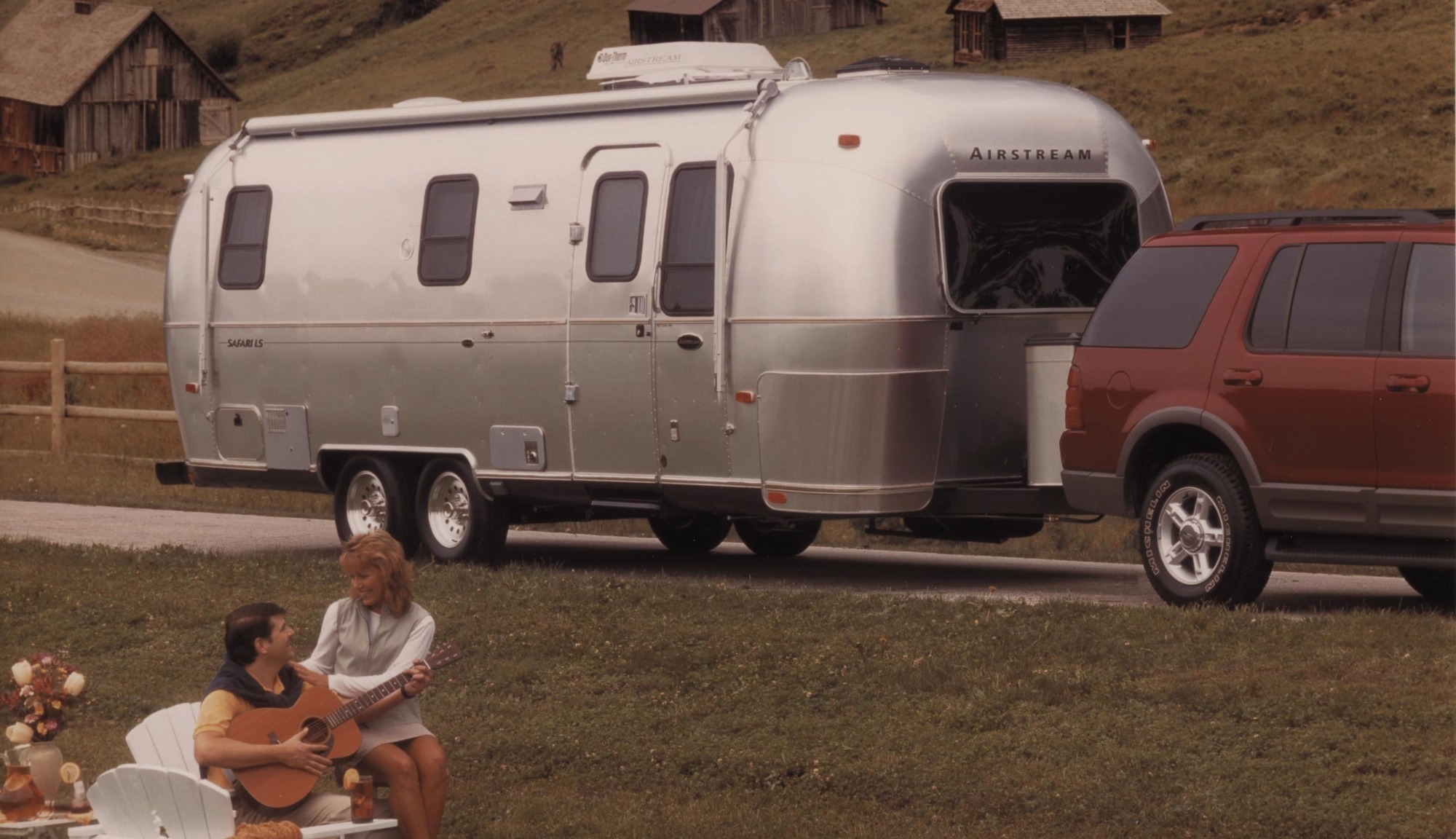 Then came a milestone that turned heads across the RV world: in 1998, Airstream introduced its first silver bullet with a slide-out. The slide extended living space at camp, showing how Airstream could evolve functionality while protecting the iconic form.
Rooftop Decks, Toy Haulers, and Adventure-Forward Designs (The 2000s)
Innovation climbed—literally—in late 2002 with the SkyDeck, a distinctive Class A motorhome featuring a rooftop deck with cushioned seating and a barbecue area. Accessible via residential-style stairs from inside the coach, SkyDeck blurred the line between mobile living room and outdoor lounge.
Airstream also embraced the grit and joy of active travel. The original Basecamp arrived in 2007, designed in collaboration Nissan Design America. At 16 feet, it wore a rugged stance and compact footprint made for spirited weekends. Basecamp’s story would continue to evolve—and explode in popularity—over the next decade.
Utility met luxury in the PanAmerica Travel Trailer, Airstream’s first to feature a Rear Hatch (albeit one quite different than today’s popular Rear Hatch feature). At 34 feet, PanAmerica was a purpose-built toy hauler with living quarters up front and a built-in garage in back, inviting motorcycles, ATVs, and gear for big adventures.
That same year, Airstream upfitted the Dodge Sprinter Westfalia. Just over 18 feet long, its bright, multi-level interior created a surprisingly spacious feel, while a unique roof bed and contemporary vehicle tech from Dodge® and Mercedes-Benz® set new expectations around reliability and safety—values that would come to define Airstream touring coaches.
Touring Comfort, Modern Luxury, and Proven Aerodynamics (The 2010s)
In 2014, the Autobahn Touring Coach emerged as a versatile travel van that was equally comfortable transporting business clients to a meeting or friends to a tailgate. With seating for eight, individual tables, and an onboard TV, Autobahn delivered business-class comfort on wheels.
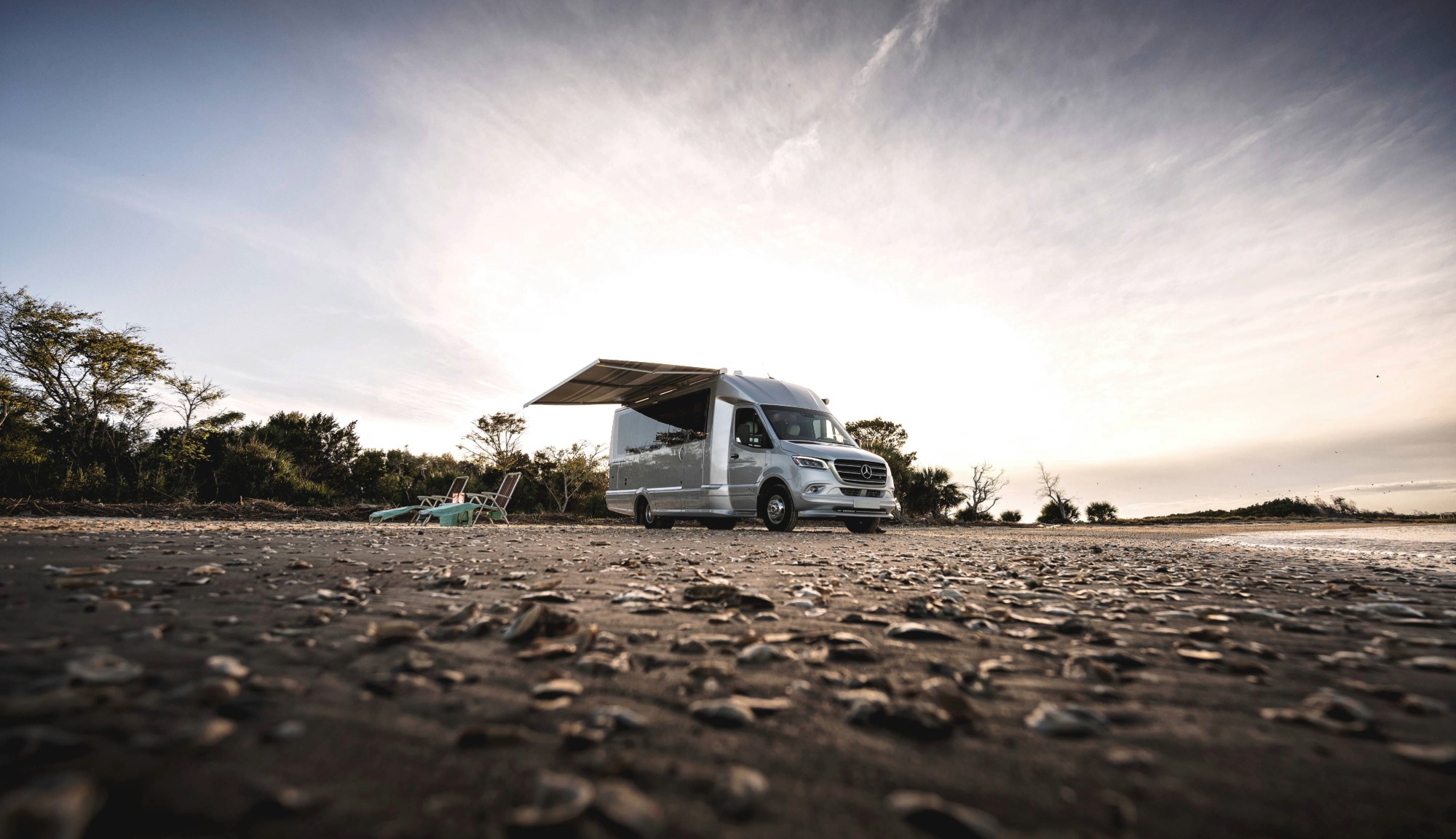
The adventure-forward ethos accelerated in 2017 with a reimagined Basecamp: riveted aluminum, rugged stance, and modern essentials (wet bath, updated kitchen, rear-spanning bed, aggressive departure angle, and tech-forward features). It quickly became one of Airstream’s most popular, best-selling models.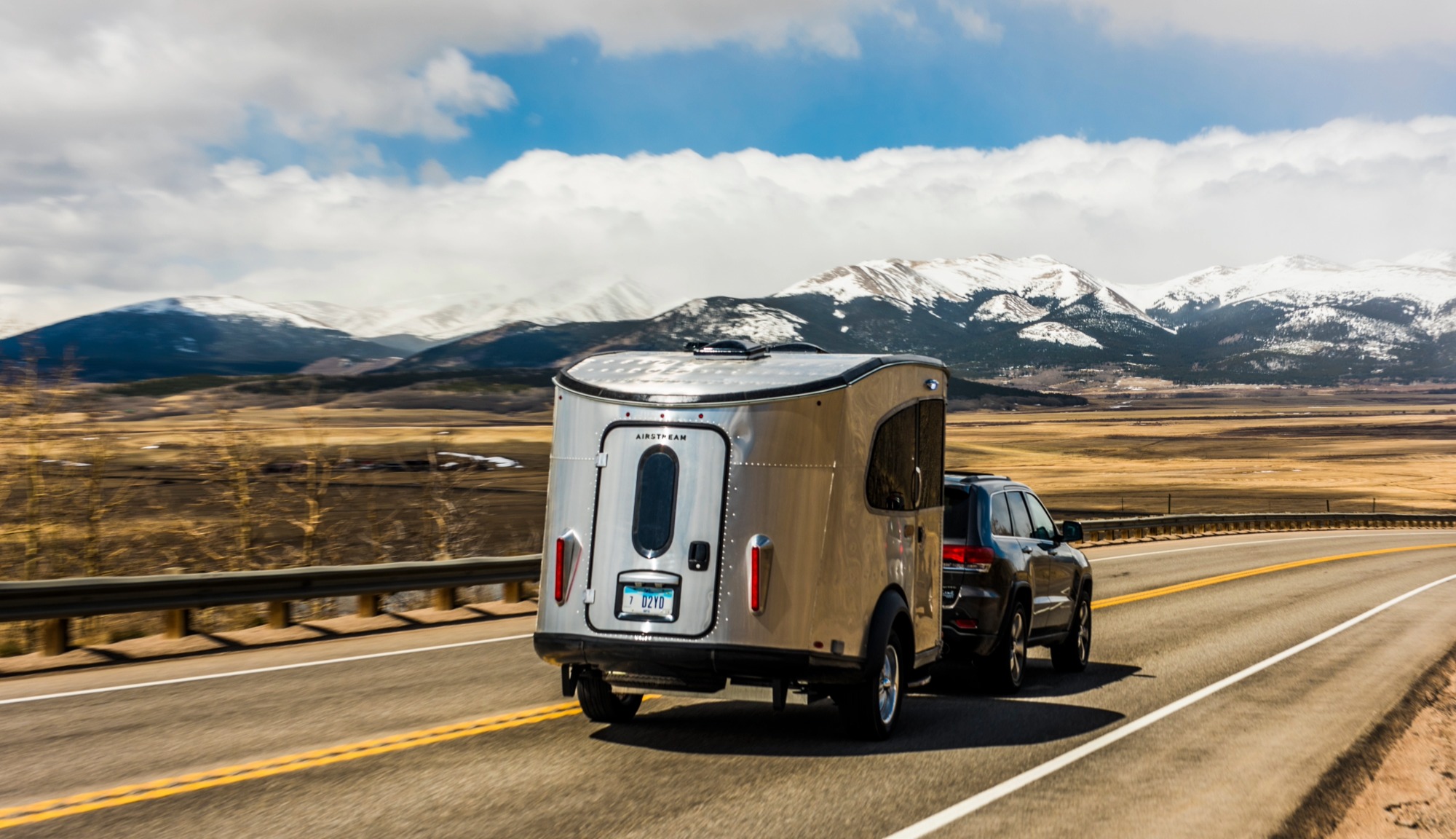 Also in 2017, Airstream launched its largest Class B motorhome, the Atlas—often dubbed Class B+ thanks to its expansive interior and premium amenities. The Atlas’s Murphy Suite slides out to make room for a full bed, delivering apartment-like comfort on a Mercedes-Benz chassis. In 2019, a modified Atlas became the Crew Transport Vehicle for Boeing’s Starliner astronaut crew, signaling how Airstream design can serve specialized, high-stakes missions, as well as continuing Airstream’s involvement with America’s space program.
 Behind the scenes, Airstream continued to modernize fundamentals. In 2020, the brand began migrating traditional travel trailers away from 5/8" plywood to seamless, water-resistant composite flooring—lighter, stiffer, more recyclable, and designed for superior screw retention and long-term quality.
Airstream also validated what generations of engineers have believed. An extensive 2021 aerodynamics study confirmed the advantages baked into Airstream’s curved, streamlined designs and opened the door to making an already aerodynamic platform even more efficient in the future.
The 2020s: Scale, Resilience, Concepts, and Off-Grid Capability
A new era of production arrived in January 2020 as Airstream moved travel trailer manufacturing into a 725,000 sq. ft. facility. Shortly after, Airstream’s touring coach production transitioned into the vacated trailer plant. The result: more space for craftspeople, more storage under one roof, and more room to hand-build the world’s most iconic RVs. Then, the world changed. Just three months after the move, Airstream paused manufacturing for six weeks as the COVID-19 pandemic spread. Plants reopened with enhanced safety protocols and demand surged as more people sought the freedom of mobile travel.
Continuing Airstream’s dedication to Special and Limited Editions, design collaborations pushed the envelope. The Pottery Barn Special Edition Travel Trailer launched in 2021, blending Airstream’s handmade craftsmanship with Pottery Barn’s signature style to set a new standard for a well-traveled life. In 2022, the Pottery Barn Special Edition and Classic introduced a subtle shell redesign, leveraging advanced stamping tools and streamlined manufacturing for quality improvements across the line.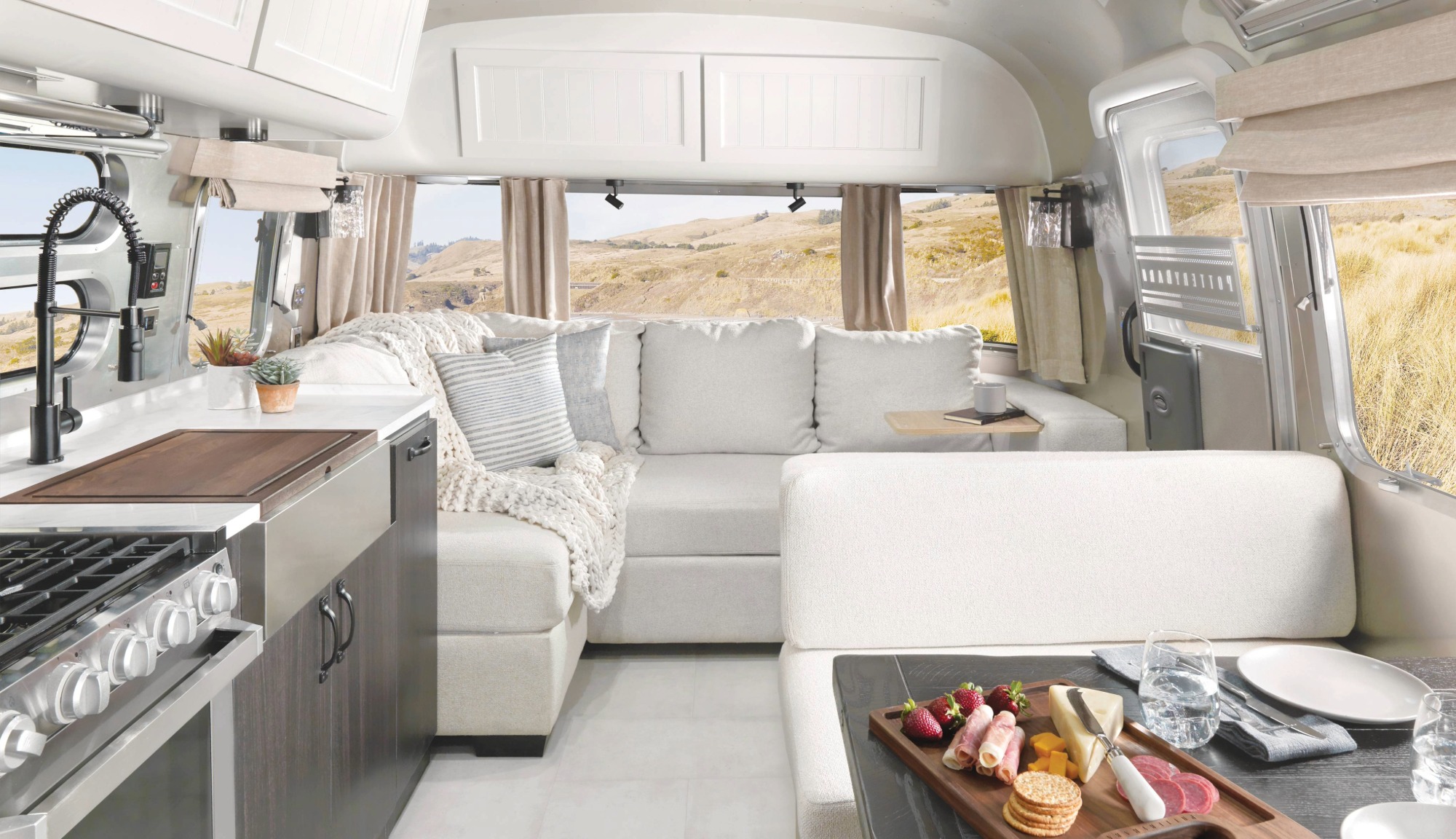 Concepts drove future-focused thinking during the 2020s. In 2022, Airstream and Thor Industries developed a one-off EV-towable concept. While not intended for production, the eStream Concept Travel Trailer informed features in core models—especially larger battery banks and robust off-grid functionality that later surfaced in Trade Wind and Basecamp Xe. In 2023, Airstream joined Studio F. A. Porsche to envision a “garageable” concept with a lowering suspension and carbon fiber shell, expanding the engineering imagination around urban storage, efficiency, and materials.
Product line strategy met customer choice as Airstream relaunched Bambi and Caravel in 2020, offering lightweight towing and identical floor plans at 16, 19, 20, and 23 feet, differentiated by interior finishes and exterior feature sets. For adventure seekers, Basecamp 20X arrived in 2021, extending the Basecamp formula to 20 feet with more space, more features, and more capability to get farther off-grid and stay out longer. 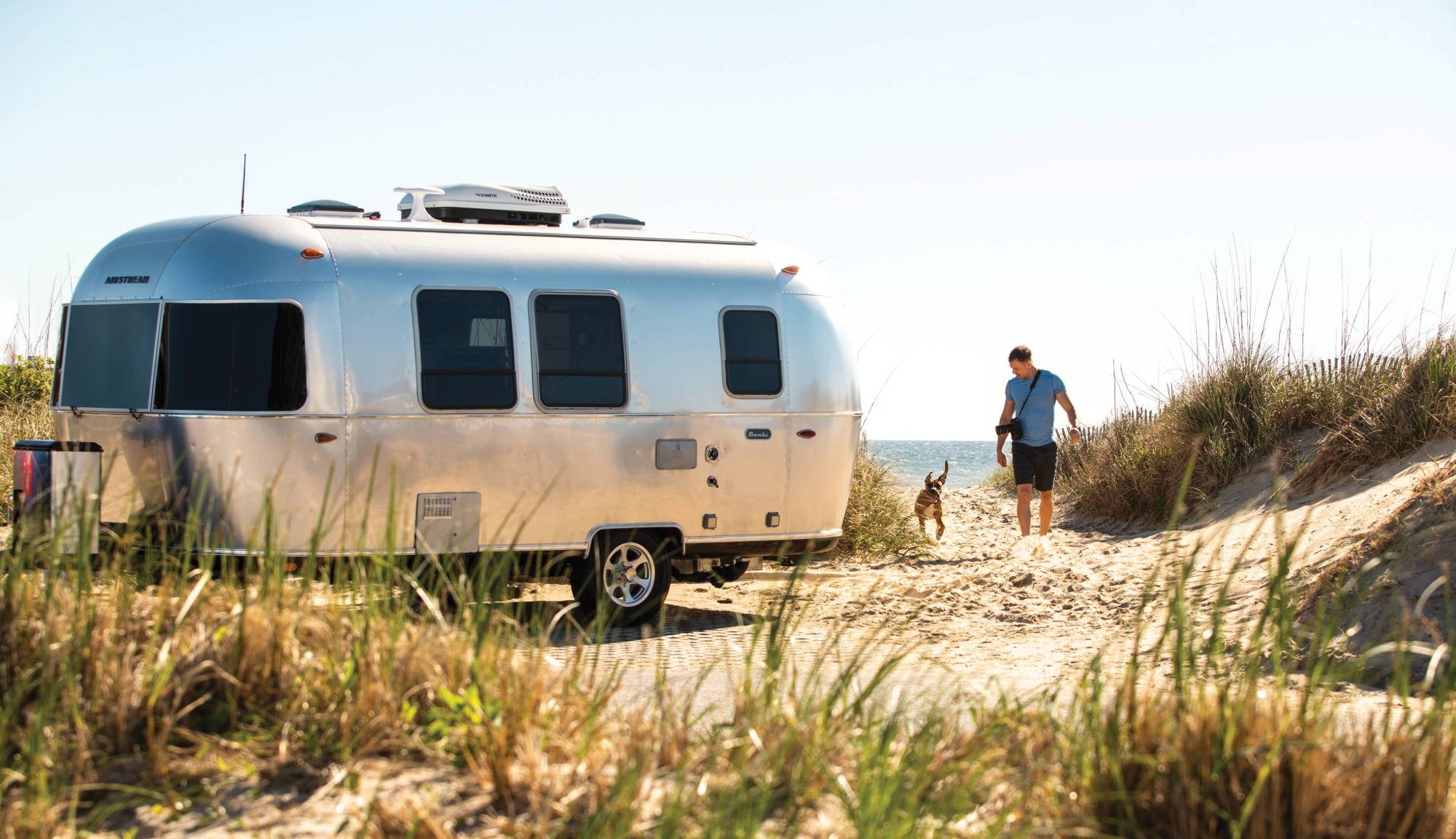 The march toward energy autonomy accelerated, as the Trade Wind Travel Trailer launched for Model Year 2024 with a large battery bank, 3-inch lift, 900W of roof-mounted solar, and the most off-grid functionality of any Airstream to date. In 2025, Airstream followed with the Basecamp Xe, a nimble 20-foot travel trailer built to venture even farther afield.
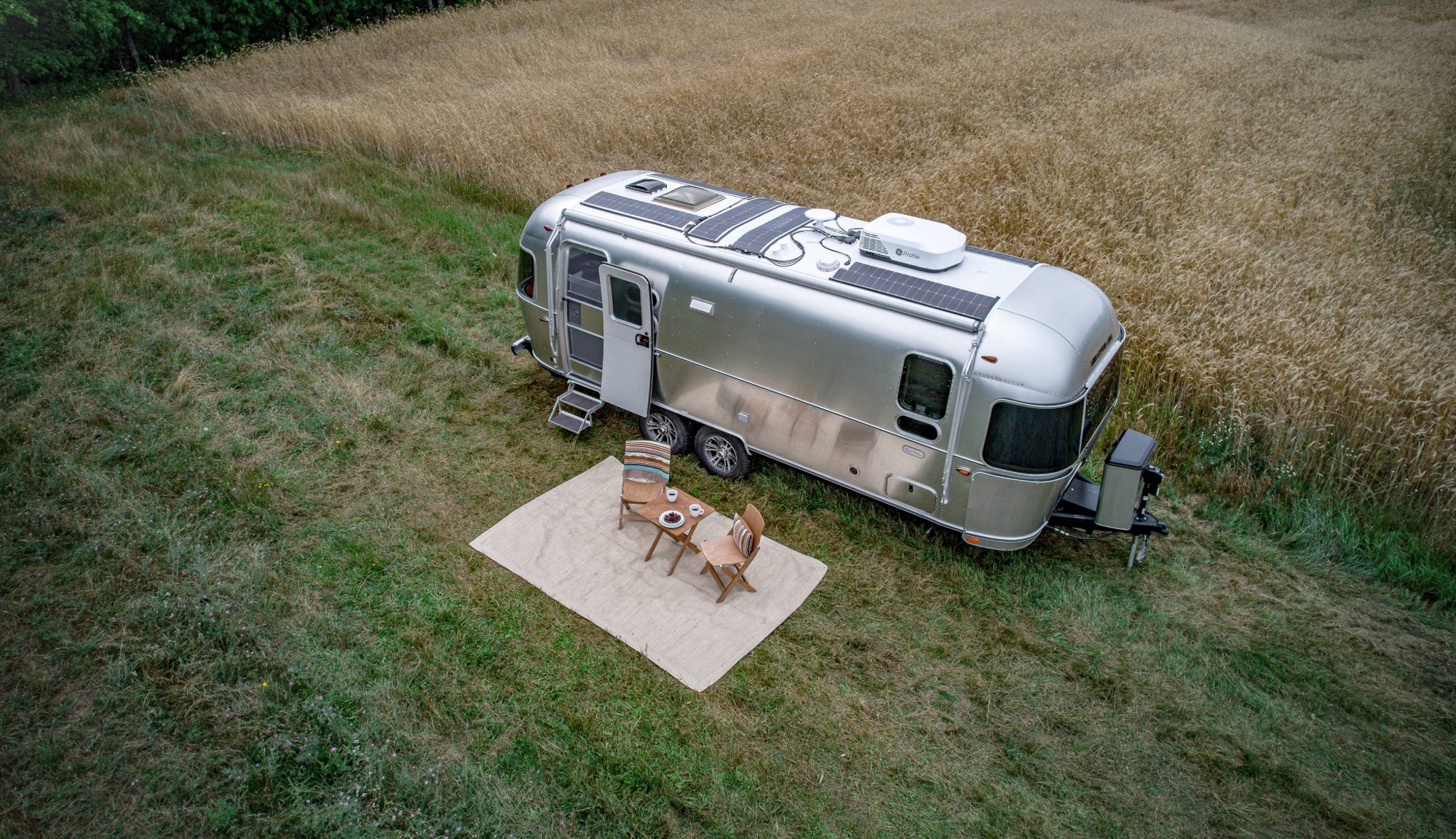 And in 2025, Airstream unveiled the Frank Lloyd Wright Usonian Limited Edition—limited to just 200 units—created in collaboration with the Frank Lloyd Wright Foundation. The design pays homage to the world’s most influential architect with thoughtful touchpoints and a modern interpretation of timeless principles.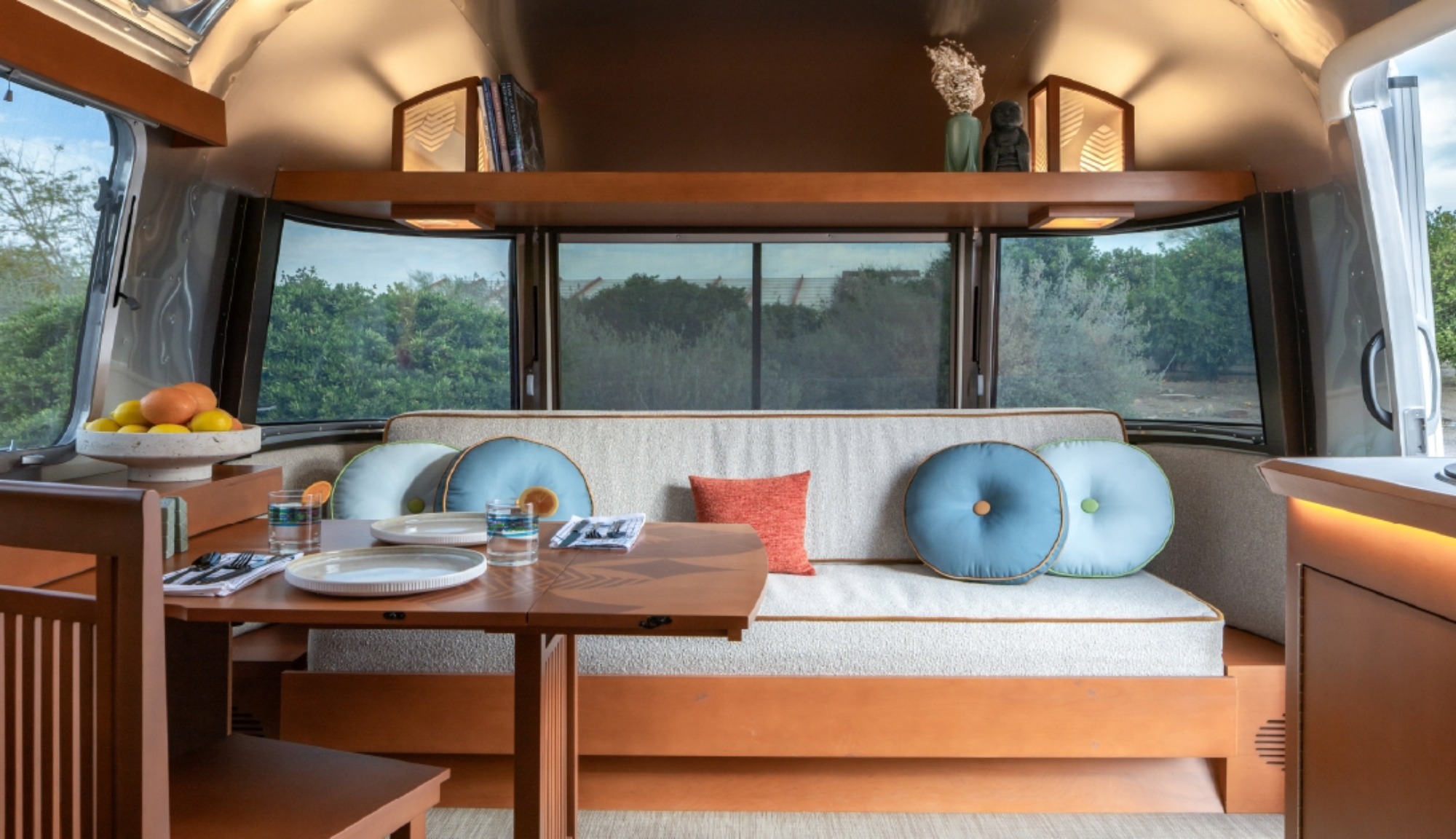
The Thread That Connects It All
From slide-outs and rooftop lounges to aerodynamic studies and composite flooring; from elegant touring coaches and designer collaborations to advanced energy systems, the first 95 years of business showcase Airstream’s commitment to innovation in service of experience. The riveted aluminum shell remains a beacon of craftsmanship, while engineering and design push the brand forward: more comfortable, more capable, and more inspiring for every journey ahead.
Across these decades, one theme emerges clearly: Airstream’s story has always been about embracing change without losing sight of its roots. For 95 years, the company has balanced tradition with reinvention, craftsmanship with innovation, and timeless design with forward-thinking engineering.
Here’s the to the next 95 years of Airstream, and the excitement of discovering what’s over the horizon.
Ready to write your own chapter in the Airstream story? Find your nearest dealer and start dreaming of your Airstream adventure.


